martes, agosto 07, 2007

Bar Mundial in El Born, Barcelona

Bar Mundial in Barcelona

[Bar Mundial en Barcelona]

Resuming my tapas run in Barcelona: for the same reasons you’ve got to be at Cerveceria Catalana to soak in the typical bar scene, Bar Mundial offers you yet another kind of down-to-earth neighborhood tapas bar tableau. Fresh seafood is the name of the game in this antiquated establishment, run by the same family for many many years.

That weekend I was in Barcelona, Nico and Ivan offered me the honor of choosing a dinner venue. And for T’s benefit, since I’m showing him MY Barcelona, Bar Mundial was my top choice, namely for the fresh-seafood-to-order tapas genre I want to orientate him through. We got lucky since Nico has an “enchufa” (literal translation for both plug and socket; Spanish slang for connections or network.) The “enchufa” is the co-owner -- the female counterpart of the husband and wife team, who went to school with the guy Nico was dating.

Okay, so we arrived, and we get (drum roll…) reserved seats at the bar – absolute prime real estate! You see, this is such a treat for me because I swear the first three times I tried to check this place out, I was flat down turned away cos it was full house, and it was late, and they simply couldn’t accommodate more. This was great. The fourth attempt and my first actual taste of the place, we were in the dining area, which was not all that fun. In contrast, the seats at the bar gets you all the action: people standing at the bar debating on the headline of the day and demanding for more cerveza, people beside and behind you talking loudly with their voice and their hands, tables so small all the food that arrives just appears to be larger and more inviting in size – you get it, it’s just more fun and less boring.
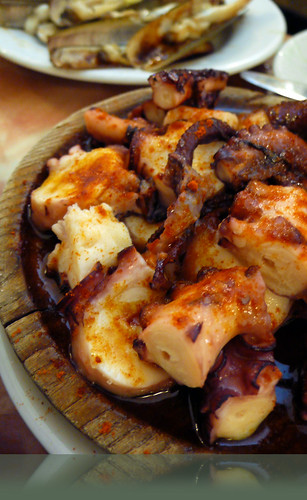
Octopus tapas

[Pulpo a la gallega]

To give you an idea of what kind of big seafood dinner we get, here’s what we ordered out of the menu: navajas con ajo y perejil (razor clams with garlic and parsley), mejillones a la marinera (mussels in white wine sauce), pulpo a la gallega (Galician-style octopus with paprika). We also had a huge serving of jamon Iberico, pan amb tomaquet (national Catalan dish – tomato and garlic on baguette) and patatas bravas (Spanish “fries” in its own right).

According to T, it was the best tasting fries he’s ever had. I’ve had some really good ones at Brasserie Harkema in Amsterdam past weekend but he insists that those Spanish ones are unbeatable, best tasting. I’m sure the olive oil used to make those patatas bravas does really make a difference.

So here you go, holiday-makers, you can’t miss this one if you’re heading to Gaudi town anytime soon. One online reviewer simply put it this way: “Popular with discerning Barcelona dwellers I cannot think of a more 'authentic' experience in the city.”

In the know:
Bar Mundial
Plaça Sant Agustí Vell 1, 08003 Barcelona
Metro: Jaume I
Reservations recommended: 933 199 056

Etiquetas:

viernes, julio 27, 2007

La Cerveceria Catalana in Barcelona

Barcelona

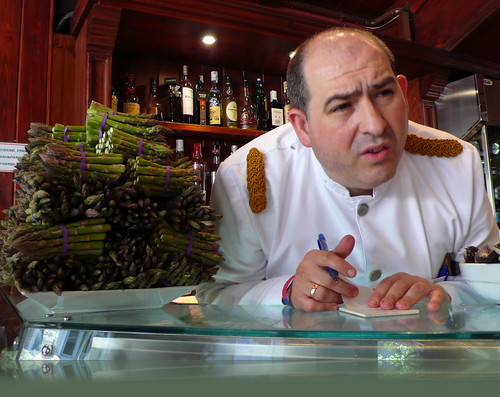
[Taking orders]

If you mention the name “Cerveceria Catalana” to someone who lives in Barcelona, the notion of clamoring for standing space at the bar at lunchtime amidst office workers and informed tourists comes to mind. With a name that literally means "the Catalan brewery", it's no wonder the place just exudes an air of heritage and prestige in terms of bona fide good traditional food.

Whenever someone visits me in Barcelona, this would be one of the must-do to expose them to authentic tapas and the whole chaotic and boisterous bar scene. There are three items I can’t miss ordering each time I’m there. The brocheta de langostinos (skewered grilled shrimps), montadito caliente de solomillo (the most perfect slice of sirloin on a piece of baguette), and patatas bravas (potatoes with a spicy mayo-based sauce).

Tapas Bar in Barcelona

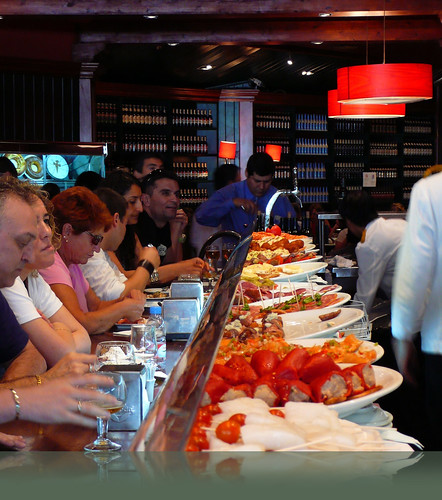
[Cerveceria Catalana in Barcelona]

The best time to go is a good half hour before the official start of lunch time in Spain – 2 p.m. or right around 4 p.m. after the lunch crowd starts to disperse a little. It’s a lot more fun to find a seat at the bar than in the proper dining room as you can pick and choose the huge array of tapas and fresh ingredients displayed in front of you.

In the know:
CERVECERIA CATALANA
C/Mallorca 236, Barcelona
Tel: (+34) 93 216 03 68

Etiquetas:

viernes, julio 20, 2007

Funky flavors of Cacao Sampaka

Cacao Sampaka, Barcelona

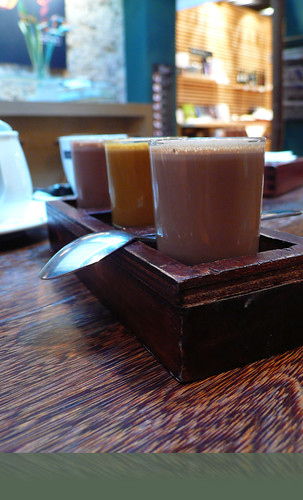
[Tasting Menu: flavored cold cocoa]

Food gifts are my favorite kinds of gifts to give. In lieu of touristy souvenirs knick-knacks I would rather get some uniquely packaged honey, chocolate, tapanade that is characteristic of the city. In Barcelona, I have found that my chocolate gifts from Cacao Sampaka are a sure winner.

I introduced T to this warmly lit shop with an array of cocoa products smacked in the middle of Rambla Catalunya, the street parallel to Passeig de Gracia – the 5th Avenue of Barcelona. We happily stuffed our baskets with hostess gifts for the next couple of trips we’re making visiting friends. What took us a hard time deciding was which series of funky flavors we should pick for the chocolate gift boxes. There were eight of them all, very innovative selections including “Truffles-coated in bitter chocolate” and “Gastronomic innovations”. It’s a very common thing for the locals to present these “bombones” when they’re invited over for Sunday dinner, so it’s a right-on business model for the owners.

Cacao Sampaka, Barcelona

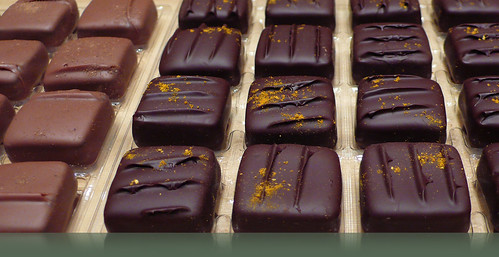
[Curry-flavored chocolate, anyone?]

The “Spices from the Americas” series for example has flavors like ginger and lemon; Jamaican pepper; cinnamon, coffee and cardamom. My favorite product in the shop are the “tabletas” shaped in two thin unconventional bars and packaged in a sleek plastic wrapper that purports to best preserve the flavors of the chocolate. They come in a great selection of flavors and textures as well as cocoa content. My two favorite are the dark chocolates. One with 71% cocoa content and raspberry- flavored, the other one with 60% cocoa and bergamot-infused.

We decided to take a break from all that walking and shopping at the in-store café. What caught our attention was a tasting menu of liquid cocoa in flavors that we get to choose from. We were completely delighted to taste the teaspoonfuls of cold cocoa, in flavors like saffron and orange, honey and vanilla, and jasmine tea. It was a shame we just feasted on an impromptu tapas meal, otherwise we would have gone for the bitter chocolate fondue with seasonal fruits. Well, all the more, it gives us an excuse to pop by again the next time we visit Barcelona at the end of August.

In the know:
Cacao Sampaka
C/ Consell de Cent, 292 • 08007 Barcelona
Tel. 93 272 08 33

Etiquetas:

domingo, julio 15, 2007

Water, the Catalan way

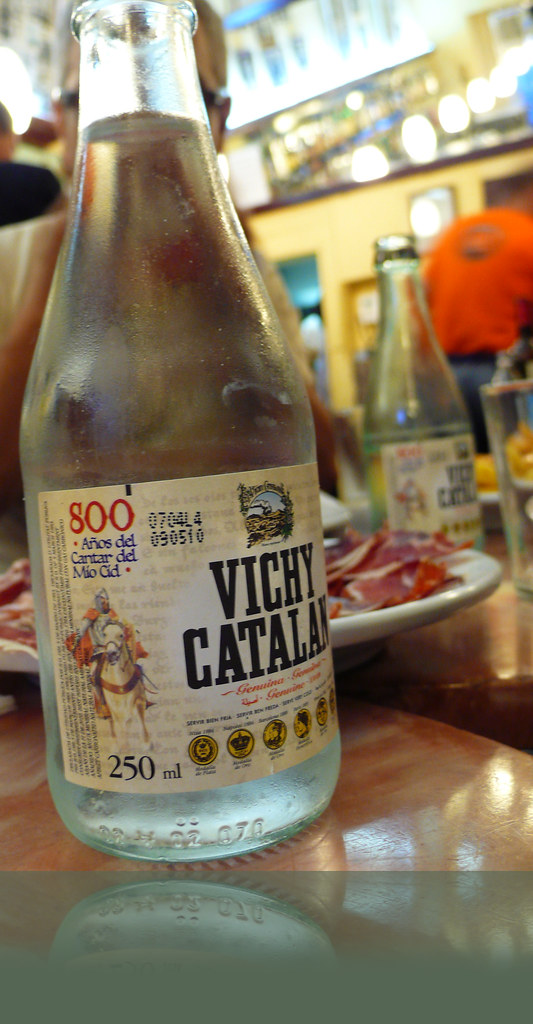
Vichy Catalan

[El Vichy Catalan]

El Vichy Catalan! What more can I say? This elixir of life that fizzes with a taint of refreshing saltiness; a taste so unique it can only come from those natural minerals from Catalan resources. And yes, it’s my favorite kind of sparkling water, or water, period, for that matter. Too bad, I can only get it on a daily basis if I still live in Barcelona. Unless I don’t mind paying 5 bucks a bottle from some specialty online Spanish grocery.

Some people can have it at room temperature, some people insist on drinking them icy cold. I’ve been told that you either love it or you hate it. I think it can be true since water with bubbles (agua con gas in Spanish) let alone tasting a tad salty can be an all new experience for some.

I must say I’ve been raving about it so much that T had it already in his mental list of “must-try’s” in Barcelona. His first reaction wasn’t what I was expecting. “Why does it taste so salty?” he said grimacing. After the second sip, after a bite of food he went, “well, I think I can have this, with food.” Then he goes, approvingly, “Hmm, it’s salty but it doesn’t leave an aftertaste.” How bewildering, he must have thought.

By the second day of the trip, we have been ordering Vichy at every restaurant! This coming from someone who normally prefers still water? Well, I’ve sorta successfully converted my boyfriend into a Vichy lover, or so I reckoned.

Etiquetas:

viernes, julio 13, 2007

A few eating finds in el Barrio Gotico

La Catedral

[ Food, I need food! ]

Forgive me. This entry was drafted in May 2006 but I never got around publishing it. I thought this would be a great interim post as I work this weekend to get my pictures and writings ready from my four-day trip last weekend to good old Barcelona and the Costa Brava. So here you go a few delightful eating finds I discovered during my occasional strays from the different routes in the Barrio Gotico.

Just right off the street near Metro Jaume I, you will find a quaint cheese shop that offers an interesting variety of artisan Catalan cheeses. They have a little sampling menu that you could do when you need a little break from all the walking and browsing.

For a mere 2.40€, you can sample a selection of three cheeses and a taste of some wine, from noon till 8 p.m. daily. On Saturdays, from 12-3 p.m., you can get your hands on a more extensive sampler of three cheeses, bread, olives, with a beverage (wine, beer or water) for just 5.85€. Not a bad deal, eh?

One of the places I go if I crave for decent japanese food is this almost hidden restaurant near La Catedral. Considered one of the best Japanese restaurants with patrons like Ferran Adria himself, you can savor a Menu del Dia for about 16€. For that you get an appetizer like seared tuna salad, an entree - you can choose one of the maki selections - and a drink. The best seats are the ones up at the bar, where all the action of the sushi chefs can be taken into view.

IN THE KNOW:
Formatgeria La Seu
Plaza Sant Just
Metro Jaume I

Shunka
C/ Sagristans, 5
93 4124991
Metro Jaume I
Metro Urquinaona

Etiquetas:

domingo, junio 04, 2006

Tortilla de Patatas

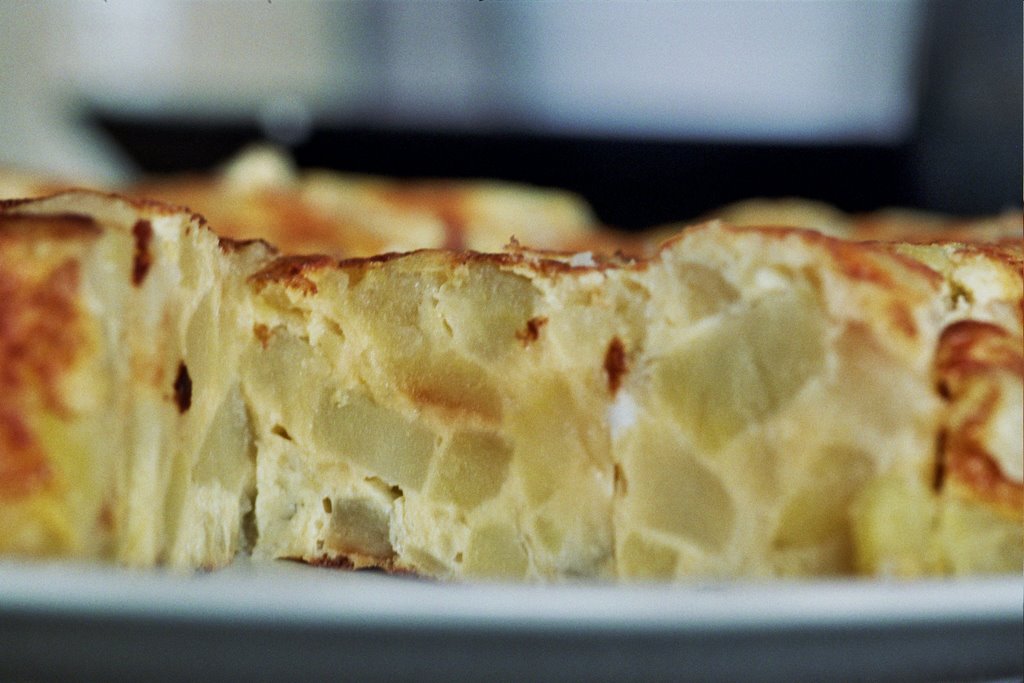
[Spanish Omelette or Tortilla Española]

You can't have a Spain-based blog and not have an entry on Tortilla de Patatas. So here's my ode to this versatile dish that could be a spanish mid-day pick-me-up (el almuerzo), or made into a lunchtime bocadillo (submarine sandwich made with crusty bread), or served cut into tiny diagonal squares as a pica-pica (appetizer) at a casual cocktail party. In fact, la Tortilla de Patatas (also known as Tortilla Española) is the classic party dish here in Barcelona. You'll sometimes get two people bringing a plate of tortilla at a potluck. Nevertheless, it is never a problem because a tortilla is never the same--a good chef always adds his or her own touch.

I'm one of those blessed ones that got one-on-one instruction from my Catalan friend's mum, Flavi. Actually, this was one of the first Spanish dish I learned to make. (The other one was gaspacho, which I shall make a nice shot the next time I make it.) After the cooking demonstration, Flavi even painstakingly wrote down the recipe for me, while recalling every single detail. If you're a budding cook, you should know that most creations you have are in your head, never jotted down anywhere, because you honed the dish through trial and error and by years of making it.

This dish is essentially uncomplicated. It's one of those things you can make anytime as it only uses pantry staples. The secret ingredient though is extra virgin olive oil. It makes all the difference. One thing to note is that there are many ways to make tortilla de patatas. This way is not the quickest, but it produces great results. The potatoes slowly simmered in the virgin olive oil gives lots of flavor and a satisfying bite.

Lucky you, here you have the recipe Flavi jotted down for me in Spanish all already translated (and enhanced) in English. I had to consult the dictionary at that time because my Spanish was still elementary a few years back.

Tortilla de Patatas
~ para 4 personas

1 sartén anti-adherente de 25 cm de diameter
4 patatas medianas
1/4 cebolla mediana
un poco de sal
4 + 1 huevos (número de personas + 1 huevo)

Pon bastante aceite en la sarten. Dejar calentar un poco el aceite.
Dorar las 4 patatas peladas y cortadas finitas más la cebolla también cortada finita.
Añadir un poco sal.
Dejar a fuego bojo y tapado durant más o menos 20 minutos hasta que esten blandas.
Batir los 5 huevos con un poco más de sal y tirar en estos huevos batidos las patatas escurridas (o sea, sin aceite).
Quitar el aceite de la sartén y dejar solo un poquito (1 cucharita).
Tirar los huevos y las patatas y dejar cocer a fuego muy lento más o menos 25 minutos.
Darle la vuelta y cocer a fuego lento 4 minutos más.

Tortilla de Patatas (Spanish Tortilla)
~ serving for four

1 non-stick pan (25 cm in diameter)
extra virgin olive oil
4 medium potatos (quartered length-wise and then finely sliced cross-wise)
quarter of a medium onion (finely sliced)
some salt
4 + 1 eggs (1 egg for each person + 1 egg)

Place enough oil in the pan. Let it heat up a little.
Leave the sliced potatos and onions to cook in the oil, adding some salt and stirring occasionally.
After 1 minute of stirring, cover the pan with a lid and leave it at very low fire for about 18-20 mintues. The potatoes should be soft but not crispy or burnt at the end of 20 minutes.
Beat five eggs in a big bowl with a bit of salt and set aside.
Drain the potatoes from oil and place them in the egg mixture.
Retain a little bit of oil from the potatos and leave it in the pan
Pour the entire potato and egg mixture into the pan.
Cover the pan with lid and leave it to cook at very low fire for about 20-25 minutes. Make sure the fire is the lowest.
Flip the tortilla using an omelette-flipper or a pan lid and let cook the other side. Four more minutes and it's done!

Etiquetas: ,

miércoles, mayo 24, 2006

La Cuajada de Oveja

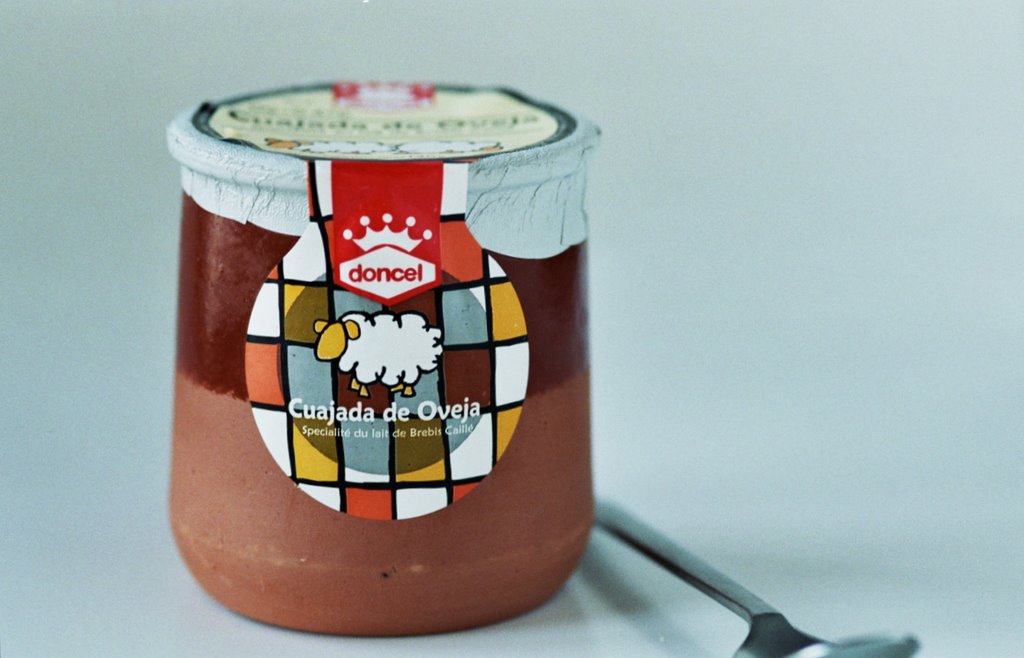
[Specialité au lait de Brebis Caillé]

What's this? Looks like a sort of yoghurt in a pretty pot, but it's not. It's la cuajada, a traditional milk-based dessert. The real ones are those made from ewe's milk and left to curdle with rennet from the ewe itself. I have come across it in the dessert section of traditional spanish restaurants' menu. Most popular in the North-eastern region of Spain where it originated, like Navarre and País Basco (Basque Country), cuajada is sometimes served with honey and fruit for breakfast, in place of yoghurt.

The creamy but light milk curd is sold commercially today with cow's milk. What a shame! The ones that come in packages, which you can make at home has starch and plant-extracted rennet instead. Hmmm....

Thankfully I found this pretty original version in an earthen pot in a typical small carniceria that also sells some cheese and other traditional food products. Also spotted this particular brand on the shelves of a fromagerie at Rue Mouffetard too. It seems like the food marketing strategy of this spanish product is pretty successful across the border. Oh, by the way, "Cuajada" means "curdled" in Spanish. Original huh?

Etiquetas:

viernes, mayo 12, 2006

Fine Teas Finds

[Sans y Sans Fine Tea]

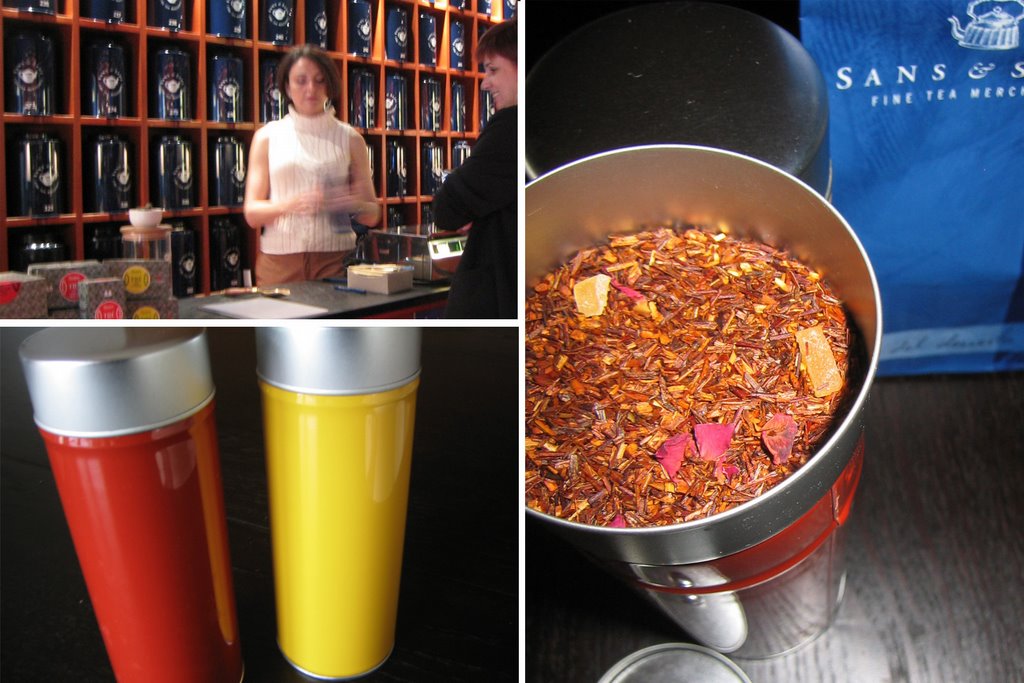
If you stroll down Carrer de L’Argenteria towards the Cathedral de Santa Maria del Mar, look out for a classy little tea shop on the left side just across from the popular tapas bar Sagradi. Once you step in, your senses will be captivated by the fragrances coming from the varieties of teas, tucked in giant-sized tins on the floor-to-ceiling dark wood shelves. Let the simplicity and stylish displays draw you in as you flick down the pages of their tea catalogue to find a tea that suits your mood.

My first encounter with this Catalan fine tea outpost -- Sans & Sans Fine Tea Merchants, was a bag of rooibos and black tea blend called Samurai given to Lionel by one of his friends on his birthday last year. The red rooibos was infused with a certain fragrant and a type of blue flowers. Unfortunately I found out that they do not stock this particular flavor anymore.

The closest I got to was Flor Del Desierto, a rooibos with bits of dried papaya, traces of chocolate and orange, and real rose petals (pictured above). Yumm! Best of all, it's caffeine-free so it makes an ideal tisane (herbal tea) before calling it a night. Right now this "tea" is my favorite. The taste of the infusion is as sweet as the tea itself. It smells so good that I've been toying with the idea of doubling it as a drawer freshener by filling it up in a handmade sachet.

[Earl Grey Green Tea infused with Bergamot]
The other tea that I discovered is called Luxus. It's a green tea infused with Bergamot oil. So many teas to fit each one's taste... what could be done is making a sampler of your own since you can get everything in 100gm bags. Or if you fancy to enhance your tea caddy collection, they've got really cute tea tins in gorgeous colors for between 4-10€.

IN THE KNOW
Sans & Sans Fine Tea Merchants
C/Argenteria 59
Metro: « Jaume I »
Tel:93 319 6081
www.sansisans-finetea.com

Etiquetas:

miércoles, abril 26, 2006

La Bascula

[A shabby-chic vegetarian-friendly co-op restaurant]

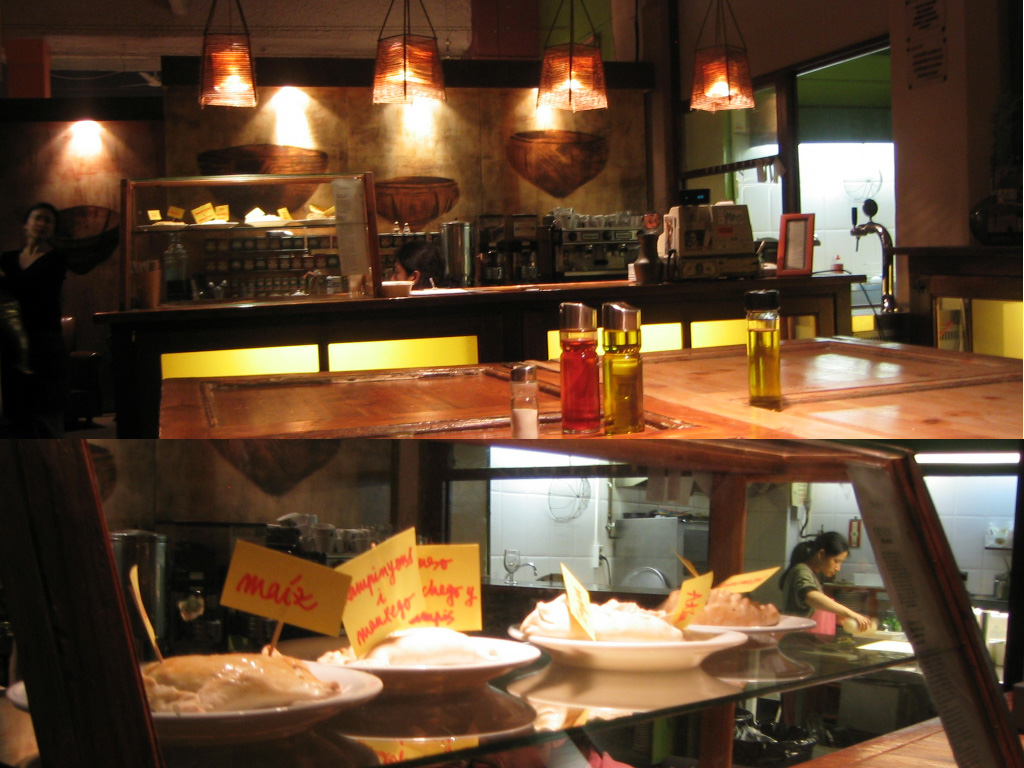
At any given time, La Bascula seems like the place I'd go for a meal or a tea. Even though I order almost the same thing everytime, I don't get sick of it. From the outside, it didn't even resemble a restaurant, but a cool anti-establishment art exhibition space. It bears huge bar tables recycled from doors. This is the waiting area-cum-bar for those crowded weekend nights. You can watch the co-op members labor over their organic food creations through the big kitchen while waiting with a beer and salivating at the empanadas displayed at the counter. Behind the counter, another huge and colorful dining area awaits you. The bohemian-feel decor brings out the cozyness and goodness of homemade fusion food using natural ingredients.

Even Lionel keeps nodding in agreement how everytime the meal never fail to satisfy us to the brim. Well, it is his favorite restaurant, and I can see why that is so. This gem of Barcelona eateries is the fruition of a group of cooking friends who drafted up the concept of a co-operative kitchen. I don't know exactly how their model is based on, but I know it involves everyone taking a part in either the kitchen or the dining area.

Their recipes are inspired by their Latin American roots (Argentinian to be exact, but not forgetting the heavy Italian influence there). The vegetarian-friendly menu (90 percent vegetarian) consists of manually elaborated Italian filled pasta, French savory crepes, Chiliean vegetable soups, Argentinian empanadas, and even the Columbian arepas. The empanadas and filled pasta are their specialty and they always come in an assortment of flavors. Sometimes I hop in for tea or merienda. It's a great location to catch up with a friend over a cup of their special teas or mate, with a slice of their confections. There's a glass display at the entrance to the dining area filled with the cakes and tartes of the day.

The portions are a true value-for-dough. Even if you order a slice of savoury tarte, it comes in a generous portion, with a beautifully assembled salad. Last night, i had a tortellini de canela, rellenos de calabaza, pistachio, y queso fresco con salsa de pesto (homemade tortellini with cinnamon, filled with pumpkin, pistachio, and a fresh curd-like spanish cheese, dressed with a generous ladle of pesto sauce.) Lionel had a gnolotti de curcuma, rellenos de ciruela, espinacas, y queso de cabra con salsa de nuez (filled pasta made of turmeric powder, stuffed with a mixture of prunes, spinach, and goat cheese, and dressed with a walnut sauce.) You can have white wine by the glass, and a flan de dulce de leche for dessert, and the bill for two should come under 30 euro.

A far cry from those over-priced fancy restaurants that come out from a guidebook or tourist-geared booklet printed in ENGLISH, La Bascula is where you can mingle and blend in with the average Spanish crowd over a wholesome meal shared with friends. For dinner, it's a deal, but make sure you go right before nine to beat the crowd. (Remember 21h or 9 p.m. is the normal dinner time for Spaniards.) If you can't wait, you can have a small tapas or a cheese sampling elsewhere in the Barrio Gotico at five!

IN THE KNOW:
La Bascula
C/ Flassaders 30 | Tel. 93 319 9866 | Open Mon-Sat 1-11.30pm
Metro « Jaume I »
(Restaurant is located one parallel street away from where the Picasso Musuem is situated)
Prices: Empanadas 2 euros. Most dishes ~6-7 euros. Desserts ~3 euros.

Etiquetas:

viernes, abril 07, 2006

La Sidra de Asturias

[A bubbling alternative at parties]

How could sparkling cider replace sparkling wine in ushering the new year? Well, that was precisely what happened in Madrid on 31 December 2004. In an act of defiance due to certain political matters, the Madrileños refuse to pay the cavamakers in Catalonia for their sparkling white wines that are traditionally served during such festivities in Spain. Thus the sparkling cider from Austurias graced all the tables in Madrid at that time. I happened to be in the capital city and at the end of my stay my immune system caved in. Little did I realize how much cider I gushed down as my friends kept pouring for one another at meal and snack times. The mere 4.5 percentage of alchohol in those green bottles certainly adds up.

Asturia is the region in the northwest of Spain that is known for its cider. Together with Galicia, and Bretagne in France, celtic/gaelic tradition have trickled into Asturia through the early settlers. You could see in this particular brand of sidra, which spots a bagpiper. (Bagpiper selling cider? Beats me.) It is a traditional drink and traces of it could be found in regional cooking as well.

Another northern region of Spain known for its cider is the Pais Vasco, or Basque Country. The taste of a Basque cider is slightly harder than its Asturian cousin. To learn more about spanish cider, check out La Sidra Asturiana's DO (designation of origin) website. It has a ton of information including types of apples and the history of cider.

=============================================

Note to readers:
I'm off to France for 10 days. Upon my return, you shall feast on what I come across in Paris, Valence and Marseille. Hasta muy pronto. À bientôt!!

Etiquetas:

lunes, marzo 20, 2006

Savoring Calçots at a Calçoltada

[Calçots Grilled On An Open-Flamed Hearth]

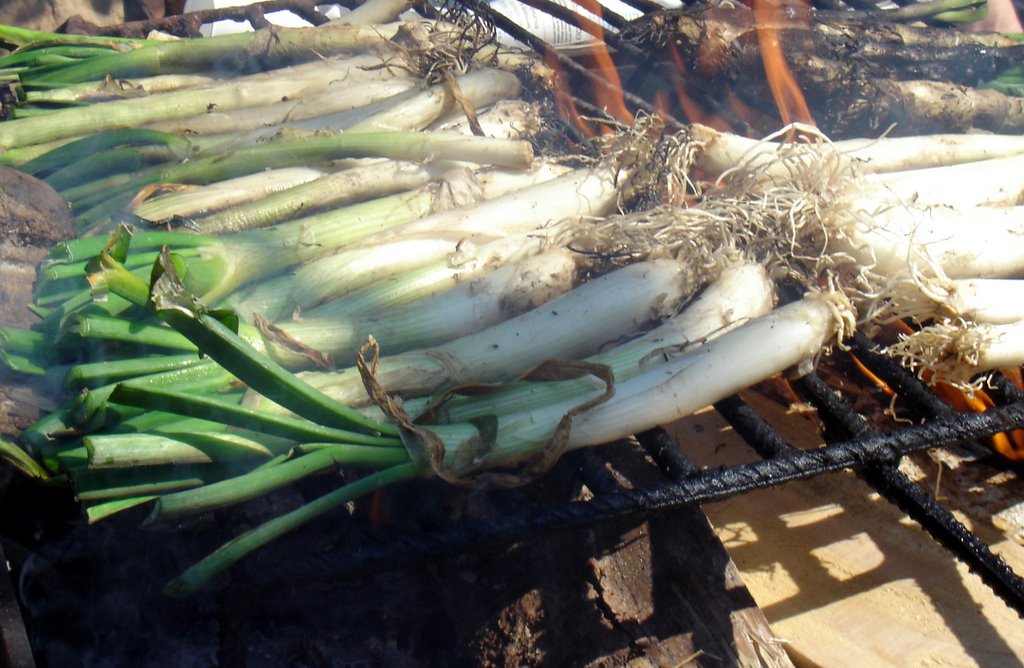
Twas a lot of fun partaking of this Catalan ritual of downing calçots (pronunced cahl-SOATS) dipped in romesco sauce and thin streams of cava from a porrón out in the open on a Sunday afternoon. Calçots are the homegrown sweet green onions that are cultivated in the northeastern part of Spain--the land of Catalunya, whose capital city is Barcelona. The seasonal vegetable has been described as a cross between a leek and a spring onion, and is esteemed an exquisite dainty. The fiesta when family and friends gather outdoors (or in the restaurant) with calçots as the central theme is called La Calçoltada.

I was invited by a friend to join her classmates at one of these calçots festivals in the outskirts of Barcelona. The place is within the compounds of a cava-maker 40 min train-ride away from Barcelona. Space is offered without cost but cavas by the dozen are obligedly purchased to consume. When we arrived at noon, many catalan families and groups have already been grilling their calçots and butifara (catalan sausages) away on the open grills fueled by wood (not coals, which would make the morsels taste even better.) Accompanied with cava (the catalan sparkling wine), or red wine, it was a big outdoor affair, reminiscent of the Memorial Day picnics we used to have when we celebrated the end of long winters in South Haven, Michigan. The weather that day was especially sunny. And as we gathered at the picnic table, warming sunrays kissed our faces and gave us an early hint of the verdure of springtime.

The region of Tarragona south of Barcelona usually sees the harvest of the first calçots in February. Then the peak season will last only for about three weeks. Grocers sell them in bunches of 50s. These sweet vegetables are grilled on an open-fire heath until the outermost layer is charred and a white smoke rises and then transferred to sheets of newspaper to preserve the heat. To devour them the traditional way, you have to peel off the blackened jackets to reveal the flavorful white bulbs, dip it in romesco sauce (made of ñora pepper, almonds, and hazelnuts), tilt your head back, and aim the leek-like onions at your wide-opened mouth. Most people down a dozen calçots in one sitting but it could easily be more. A note of caution: forget about being dainty at a calçoltada because it's a messy affair involving sooty fingers and if you’re not careful, a blackened nosetip.

[Tasting Cava the Catalan Way]

Resources:
More on Catalan Cuisine http://www.fell-walker.co.uk/catalan.htm

Recipe: [ Salsa Romesco ]

6 ripened tomatoes (tops sliced off)
1 entire head of garlic
12 raw almonds
12 hazelnuts
1 tiny slice of baguette or pan tostado
1 ñora pepper
balsamic vinegar, salt, pepper, extra virgin olive oil

Place tomatoes, the head of garlic (as it is), the slice of toast in the oven, and roast for about 20 minutes until the tomatoes and garlic are soft and the bread hardened. Remove from oven and let cool.

Meanwhile, process or pound nuts until they are completed grounded. Add a dash of balsamic vinegar to the slice of toast and add it to the nuts. Keep pounding or run the machine. Then, add the dried pepper, and the peeled cloves of garlic, and lastly the peeled tomatoes. During the process, add olive oil until you get a smooth paste. Add salt and pepper to taste.

Note: the sauce is great for anything off the grill, in my opinion. It makes a great vege dip too.

Etiquetas:

martes, febrero 14, 2006

Seoul Food

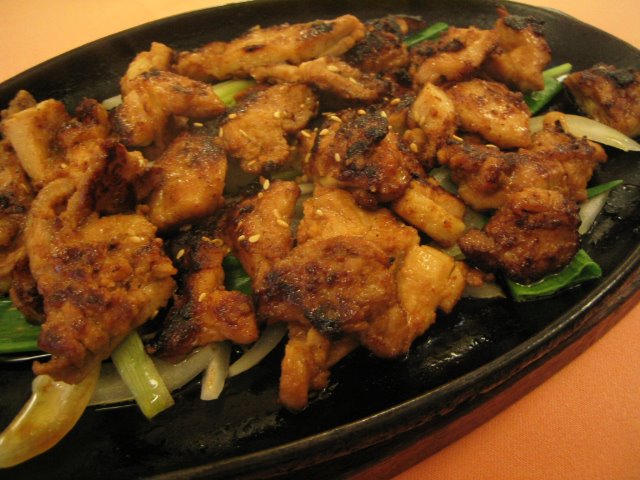
[Korean Barbecue Chicken]

Tiene buena pinta, no? No puedo afirmar que es una creacion mia pero sino, es una de las delicias coreanas de los dueños del Restaurante Coreano Seoul, ubicado a menos de una manzana de la puerta principal del Hospital de Sant Pau en Avenida Gaudi. Una vez fui con un grupo de amigas y hemos comido muy muy bien, y ademas sobraba la comida.

La mejor opcion en funcion de valor-precio es el Menu Gaudi que vale 18.50 euro. Te daran un primero plato de raviolis asiaticos o una tortilla de gambas a la coreana. Luego, tendras que saborear los platos tipicos de gastronomia coreana: Bi Bim Bap, un plato de arroz con ternera, verduras, y un huevo crudo que viene en una cazuela de hierro que sigue cociendo los ricos contenidos sobre la mesa. Los platos siguientes son el pollo a la parilla en la foto y un plato de mariscos. Tambien tienes una gran seleccion de postres para acabar tu comida. Te recomiendo lo de platanos fritos. No olivides que cualquier comida en el restaurante viene con los platitos de tapas coreanas que te sierven al principio con las sonrisas de la Señora dueña y el camarero William que es ultra amable.

Seoul Restaurante Corea
Av. Gaudi 70, 08025 Barcelona
Metro: Hospital Sant Pau (L5)
Tel: 934502617

Etiquetas:

viernes, enero 27, 2006

El Pan de Olivas

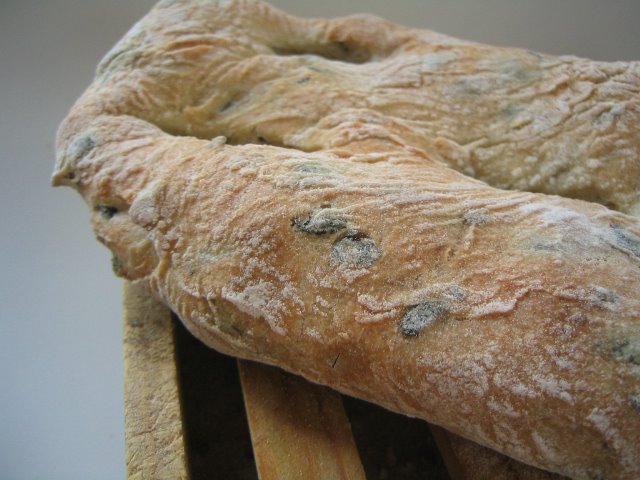
[Olive bread]

The beauty of living in Europe is the exposure to authentic breads made according to ancient recipes. Slowly but surely, throughout the years of my "exile" (read voluntary absence) from Asia, bread is slipping into my diet at the dinning table, replacing my natural urges for fragrant jasmine rice.

One of my preferred bakery in Barcelona is La Boulangerie (aptly named in French, meaning THE bakery) and they happens to carry one of my preferred breads too -- el pan de olivas -- a crusty bread made of succulent pitted black olives. To my knowledge there are three branches, two of which are right at Avenida Gaudi, the diagonal road that cuts through a few massive blocks linking the massive Sagrada Familia and the modernistic Hospital San Pau. The third one is near Passeig San Joan in the L´eixample Derecha.

If you happen to live in Barcelona, or vacationing for that matter, the one right outside the entrance of the Hospital San Pau on C/Santa Maria de Claret has a great breakfast or merienda deal. For 2.20 euro or so, you get a nice hot cup of cafe con leche with a homemade or in this case storebaked tart or cake. Mind you, we´re talking about real confections to the tune of wholegrain apple pie and apricot spanish-style cheesecake, which would cost at least 2.50 euro a slice if it´s to go. And of course after your little snack or breakfast, you can pick up your daily loave of bread. I suggest molde de nueces, a wholegrain molded bread with walnuts, or the one featured in the picture above.

Etiquetas:

lunes, diciembre 19, 2005

Best Crema Catalana in Barcelona, I reckon.


Viola, here's presenting one of the most mouth-watering desserts in Barcelona, Spain. Many places make it here in the city since it's named after the Catalonian region (Catalunya), but none will beat the one pictured here served at Granja M. Viader. To enjoy your treat, you first have to stare gratefully at it for a few moments. While doing that, appreciate the texture of the crispy caramel coating. Next, gently tap your teaspoon on the caramalized surface. Pick up a spoonful gently from the edges and let it slide gently onto your tongue. Now feel the creamy goodness of the custard tinted with hints of the burnt sugar. Well, if you live in Barcelona, you don't have to drool. Just go get yourself a treat!

Note: Some say this is the catalan version of the french "crème brûlée" and the english "burnt cream". I say let the Catalans claim what they want!

Here's an easy recipe. Try it and let me know how it turns out.
Crema Catalana
Ingredients:
6 egg yolks
200g or 3/4 cup sugar
3/4 litre milk or 2 cups milk
1 cinnamon stick
2 long strips of lemon peel removed with a vegetable peeler
3 tablespoon corn flour or all-purpose flour

1. Beat yolks until light then whisk in 150g or 1/2 cup of sugar
2. Bring to boil milk in a saucepan together with cinnamon and lemon peel and then remove from heat and strain.
3. Whisk milk with egg mixture
4. Dissolve cornflour or flour with a little milk and whisk into the mixture
5. Place the mixture over low heat and cook, stirring constantly until it begins to boil
6. Spoon custard into a pudding bowl or among 6 individual gratin dishes or ramekins and allow to cool before placing in the fridge.
7. Before serving sprinkle 2 teaspoons of remaining sugar on top and caramelize by placing under a hot grill briefly until the sugar melts and turns brown

Etiquetas: ,

miércoles, noviembre 16, 2005

Saturday morning at Granja M. Viader

Lately I´ve been in the bouts of trying out different eateries. I guess the thought of leaving Barcelona in maybe as early as eight months has something to do with it. I´ve been catching myself chasing after the many things I´ve wanted to do here but have not gotten the time to do. Over the weekend, I had an amazing mid-morning breakfast bonanza at Granja Viader on C/Xuclá 4, situated on a tiny lane just a stonethrow´s from Le Meridian on La Rambla and Pintor Fortuny. A visit to this traditional dairy bar (granja) is like a trip down memory lane with the marble tables and memorablia displayed on the wall. The place has been there forever, and it still looks the same, I believe, since the 40s. I called for the Chocalate Suiza, a hot chocolate made to the pefect consistancy (not too thick, like the typical ones they serve in Spain) topped with an enormously generous scoop of homemade cream or nata. The cream is amazing. Just a tint sweet, completely casera, a far cry from the squeeze-out commercial versions. The best thing to go with the chocolate are little sweet cake fingers called melindres shown here in the picture. My companion Lionel and I also ordered a Flan de Mato which we shared happily. The mato cheese is a specialty of Barcelona, resembling ricotta in taste and texture. Apparently this is the only place in Barcelona that makes it and is certified by the Catalan government. This is also supposed to be the oldest granja in the city. Before you leave, you could even take back some specialty cheeses with you as they have a wide variety plus other desserts displayed near the entrance for sale. Apart from that, you can also bring back the mato, fresh nata, and honey if you fancy to make your own traditional Catalan desserts at home.

In the Know:
Granja M. Viader
C/Xuclá 4 Metro: Catalunya (Líneas 1 y 3)
Opening Hours: Mon-Thrs 9 to 13.45 and 17 a 20.45. Fri and Sat 9 to 14 and 17 to 20.45 (Closed on Monday mornings, Sundays, and Festivos)

Etiquetas: